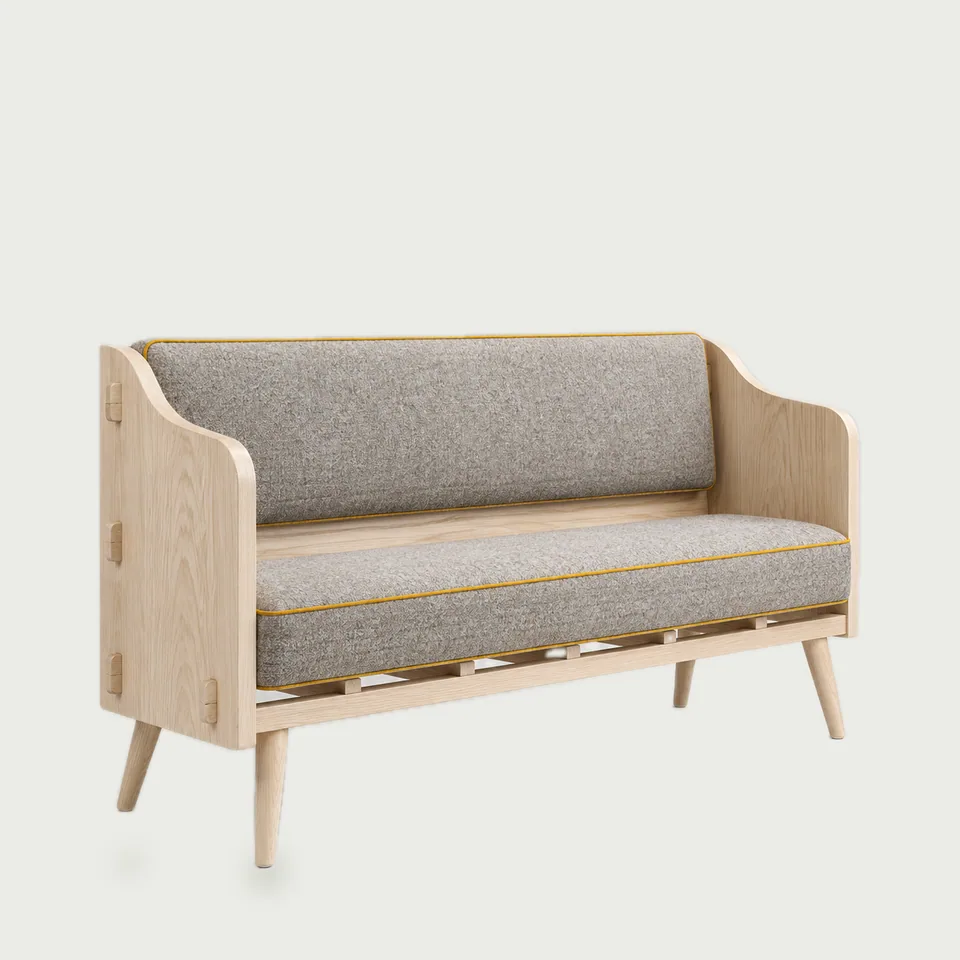
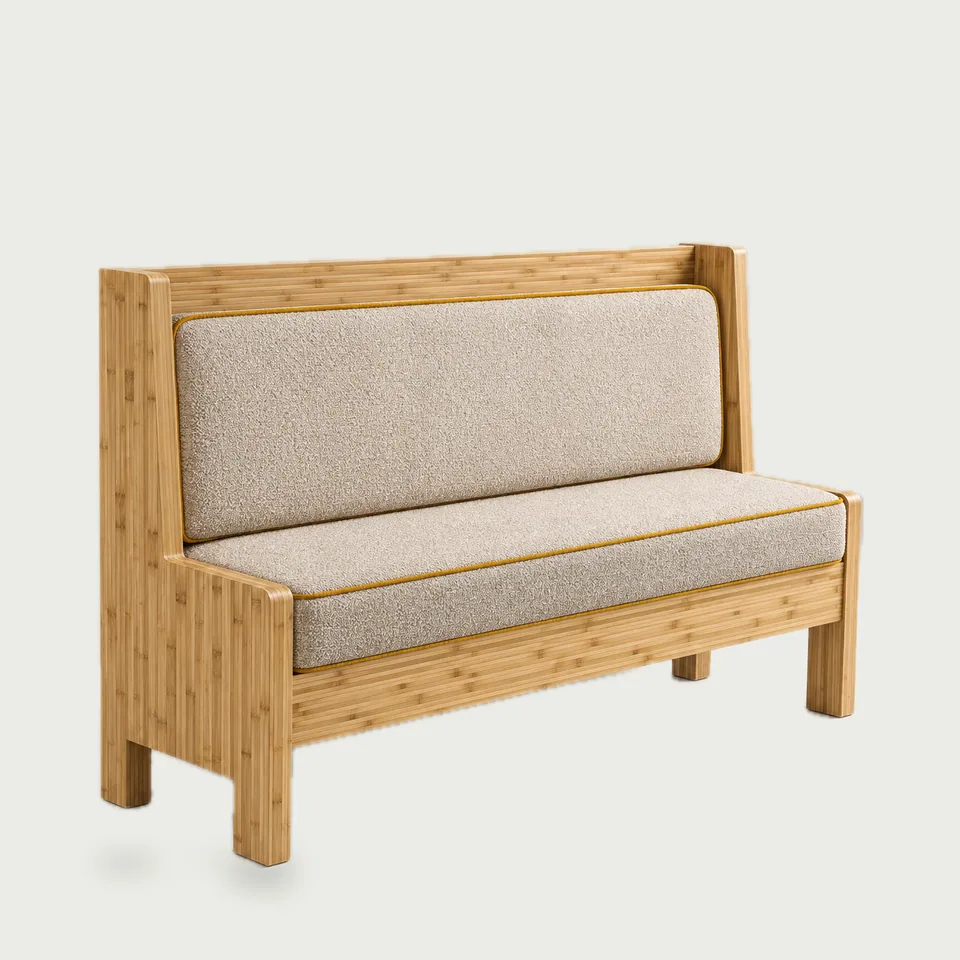
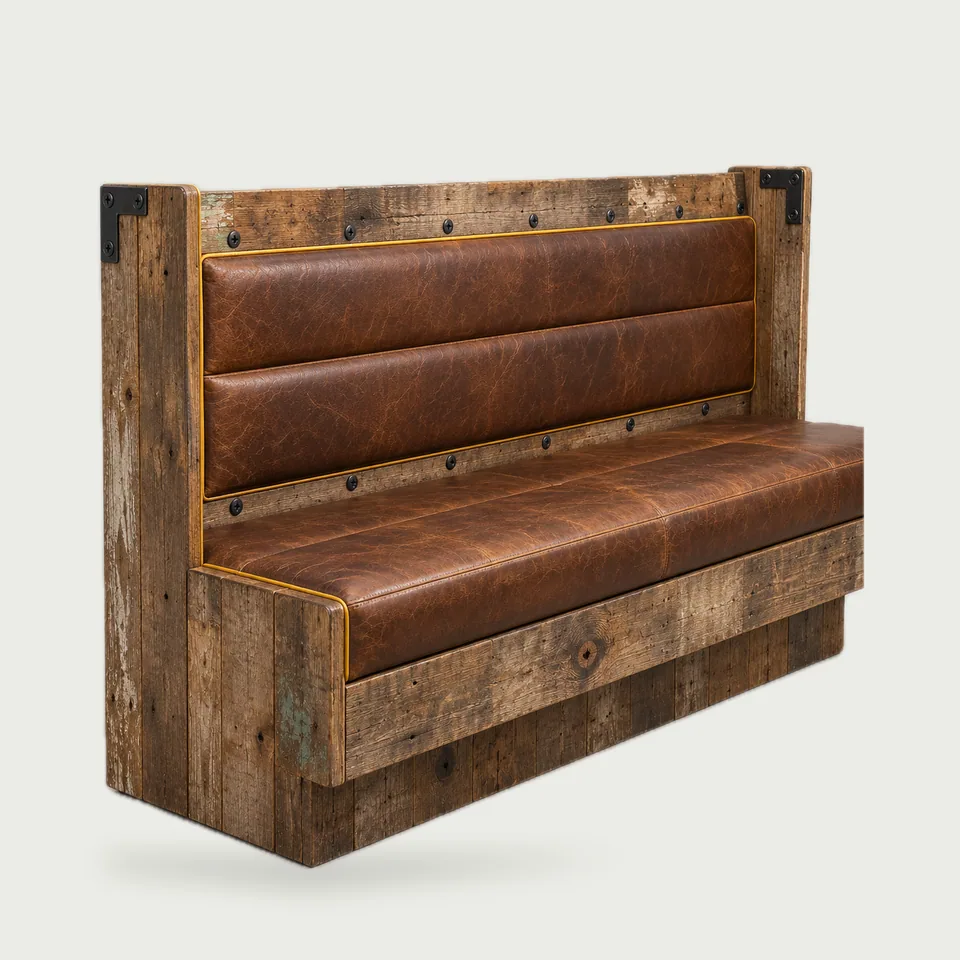
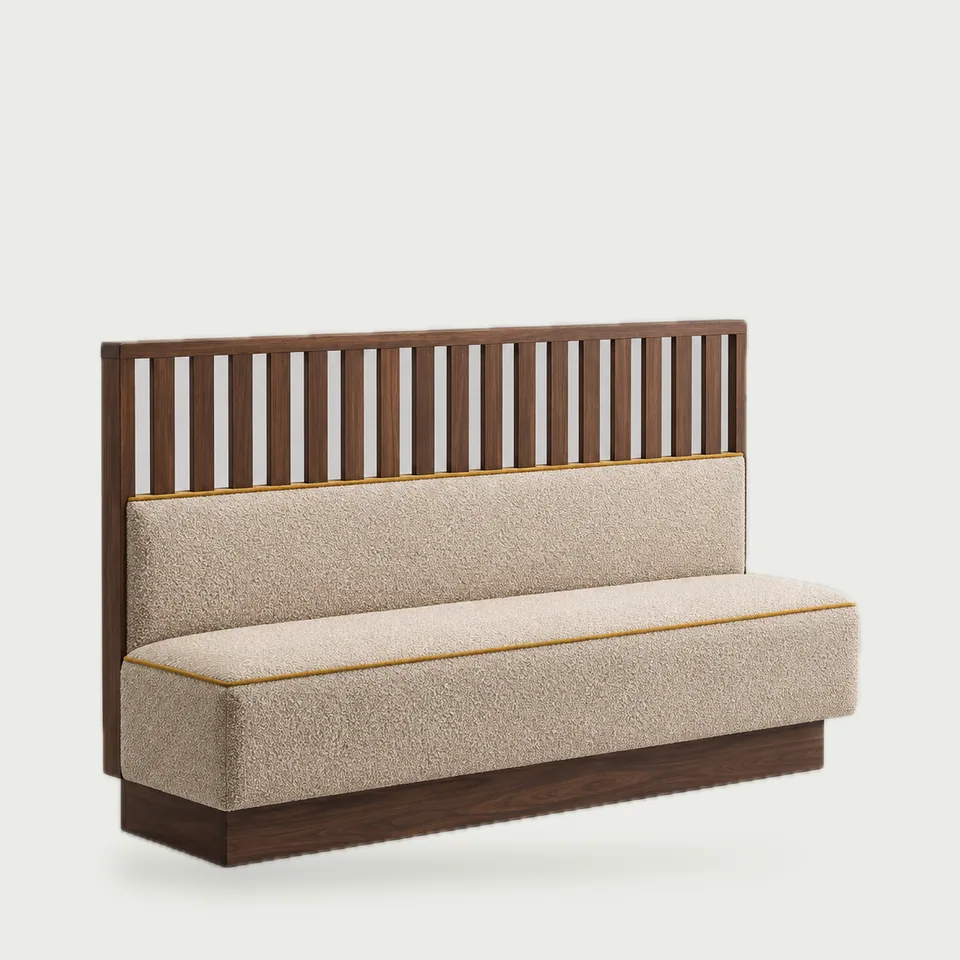
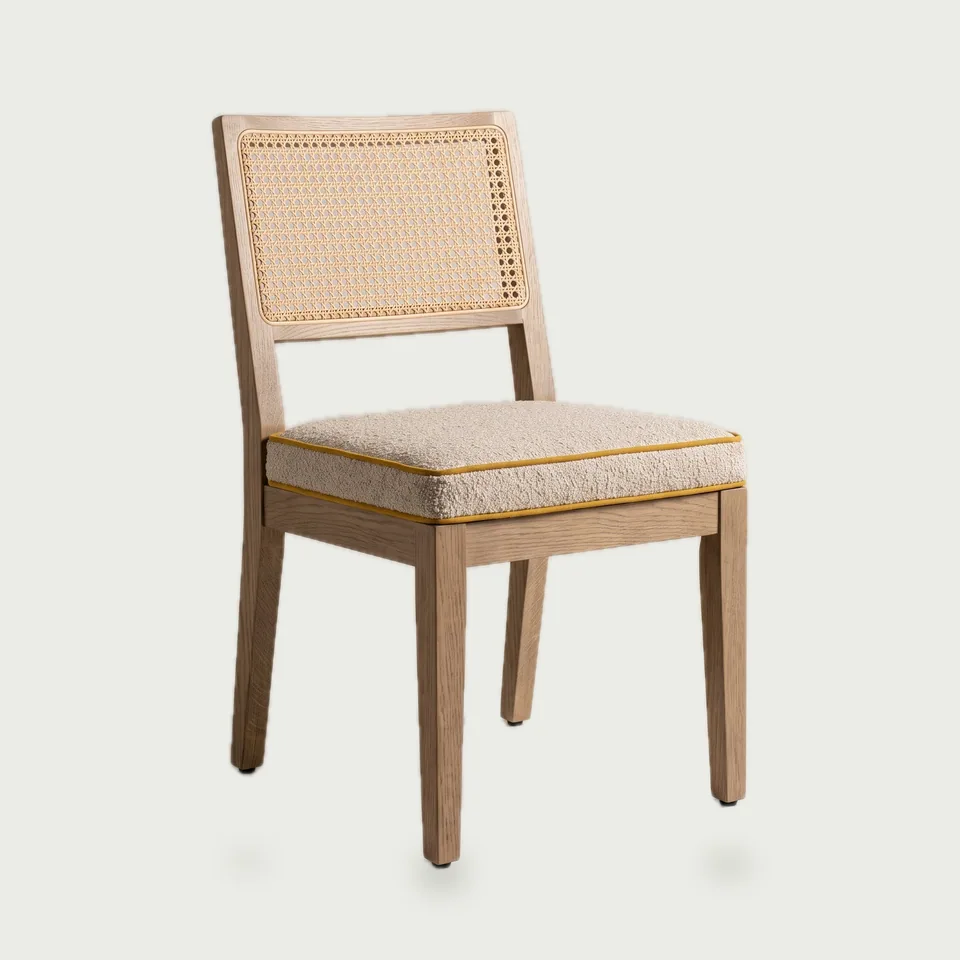
Solid timber has two practical advantages in restaurant seating. It can be repaired: a dent or scratch in solid wood can be sanded and re-oiled, whereas damaged veneer or laminate usually means replacement. And a joint in solid timber can be re-made, where a chipped edge of particleboard cannot.
Frame materials compared
| Material | Repairability | Formaldehyde consideration | Typical use here |
|---|---|---|---|
| Solid hardwood (ash, oak) | High: sand, re-oil, re-glue joints | None from the timber itself; check finishes | Visible side frames, legs, slats |
| Engineered bamboo | Medium–high: sand and refinish | Depends on adhesive; ask for emission class | Side and back panels |
| Reclaimed timber boards | High; character improves with wear | Depends on any old paint or treatment | Panels, backs |
| Plywood | Medium | Depends on adhesive and emission class | Hidden seat decks and backs |
| MDF / particleboard | Low | Composite panel emission rules apply | Not used for structure in this collection |
Honest notes
Solid timber is not automatically lower-impact; it depends on where it was grown and how it was harvested. We do not make chain-of-custody claims for timber unless the supplier provides documentation for the specific batch, and we tell you which species and source we can document for your order. Reclaimed boards vary in colour, nail holes and texture, and supply is confirmed per project.
Hidden parts such as seat decks are usually plywood for strength and stability; we specify low-emission panels to the destination market's requirements. Our timber guide explains CARB Phase 2, TSCA Title VI and the EU formaldehyde limit in plain terms. Start with the Ash Joinery Booth.